


Hand & Upper Extremity - Grandparent Holding Baby Hand & Upper Extremity - Grandparent Holding Baby
Take back your everyday.

Treatment for Neck Pain

The neck supports the weight of the head and enables a wide range of motion, making it vulnerable to injuries and conditions that can cause pain and limit mobility. Neck pain is commonly the result of strained muscles, osteoarthritis, a cervical herniated disc or spinal stenosis. If you or a loved one is experiencing neck pain accompanied by numbness, loss of strength in the arms or hands or pain radiating down the arm, it is important to seek medical attention.

Connect with our Spine SpecialistsContact Icon


During your visit, your healthcare provider will review your medical history and perform a physical examination to assess your pain level, strength and neck mobility. In many cases, additional diagnostic testing may be recommended.
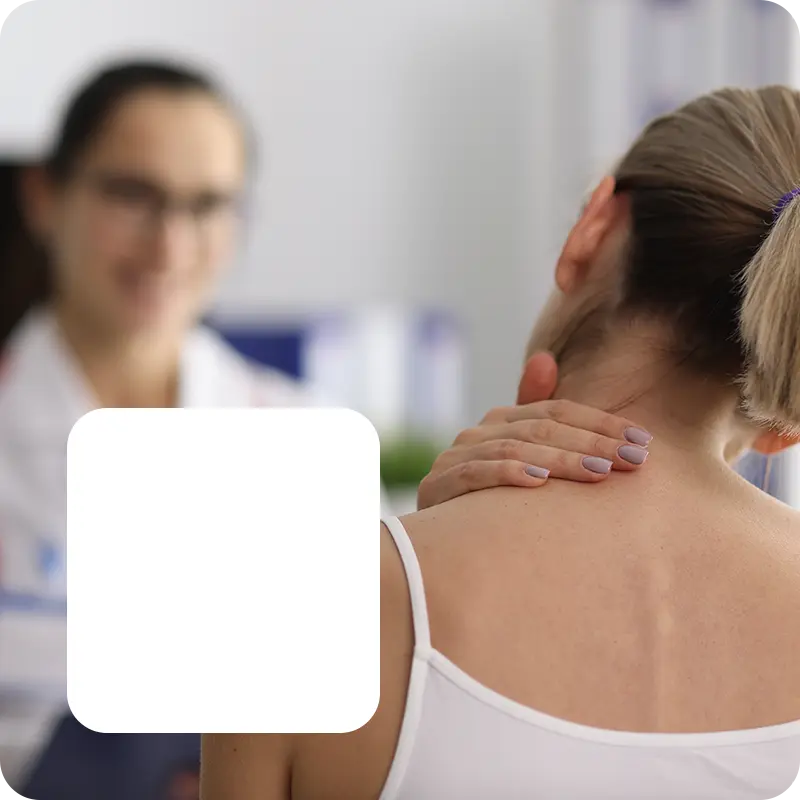
Woman with Neck Pain

Diagnostic Testing

Imaging – Used to visualize the spinal cord, nerves and surrounding structures, and to identify any compression or structural abnormalities:

    • X-ray
    • CT (Computed Tomography) Myelogram (performed with contrast dye)
    • MRI (Magnetic Resonance Imaging)

Electrical Testing – Electromyogram (EMG) to assess nerve function and identifies nerve irritation or damage.

Blood Tests – To detect inflammation or infection that may be contributing to your symptoms.

Treatment Options

After reviewing your diagnostic results, your provider will determine the most appropriate treatment plan based on your condition and symptom severity. For first-time episodes of neck pain, conservative (nonsurgical) options are typically recommended. At Specialty Orthopaedics, our spine specialists work closely with each patient to create a customized plan tailored to their specific needs and goals.

Non-Surgical Treatment

Prescribed Medications

Medications such as anti-inflammatories, muscle relaxants, pain relievers or steroid medications to reduce swelling and discomfort.

Heat and Cold Therapy

Start by applying cold compresses and then alternate hot and cold throughout the first 24–48 hours to minimize inflammation and pain.

Activity modification

Modify lifestyle and daily activities to avoid movements that aggravate symptoms.

Physical Therapy

Participate in physical therapy to improve posture, strengthen supportive muscles and maintain flexibility.

Supportive Devices

Neck brace or a cervical collar may be recommended to limit motion, reduce pressure and provide support (used only when medically appropriate).

Injection Therapy

Your provider may recommend epidural steroid injections to reduce inflammation around the spinal cord and irritated nerves.

Surgical Treatment

If symptoms are severe, involve significant nerve compression or do not improve with conservative care, surgical options may be considered. These procedures aim to relieve pressure on the spinal cord and nerves while stabilizing or preserving movement in the cervical spine.

Discectomy

Removes a herniated or bulging disc to create more space for the spinal canal. A foraminotomy may be performed at the same time to widen the nerve root exit. Some patients may require spinal fusion afterward to provide stability, particularly when multiple levels are involved or instability is present. Fusion uses bone grafts and hardware such as plates and screws to support the spine.

Microdiscectomy

A minimally invasive technique using a small incision and specialized tools to remove the herniated portion of the disc with minimal disruption to surrounding tissues.

Anterior Cervical Discectomy and Fusion (ACDF)

Performed from the front of the neck, the damaged portion of the disc is removed to relieve nerve pressure. The vertebrae above and below are then fused with a bone graft to stabilize the spine.

Posterior Cervical Discectomy and Fusion (PCDF)

Often recommended for multilevel herniations or cases requiring more extensive decompression. Performed through the back of the neck, this procedure may include a laminectomy to open space for the spinal cord, followed by placement of rods and screws for stability.

Cervical Laminectomy

Removes the lamina—the “roof” of the vertebrae—to enlarge the spinal canal and relieve nerve compression. In some cases, a posterior laminoplasty may be performed to maintain stability while expanding the canal.

Cervical Artificial Disc Replacement

A motion-preserving alternative to fusion. A prosthetic disc is placed in the damaged disc space, allowing the neck to retain more natural movement while relieving pressure on nerves.

If you have been involved in an accident that may have caused a neck injury, or if you are experiencing any symptoms including sharp and ongoing pain, contact the spine physicians at Specialty Orthopaedics. Our team provides patient-centered care focused on accurately diagnosing and effectively treating neck pain and stiffness.

Our Outpatient Surgery Center

Specialty Orthopaedics is pleased to offer our on-site ambulatory surgery center, where patients can receive same-day surgical care. Our center provides the convenience of surgery outside a hospital setting, allowing patients high-quality care at a reduced cost, shorter wait times, no extended hospital stays and streamlined scheduling. As the only orthopedic outpatient surgery center in Hall County, we are committed to delivering the best patient care and surgical experience.

Why Choose Specialty Orthopaedics?

Our vision is to provide excellent, patient-focused, comprehensive orthopedic care to patients of all ages across North Georgia. With more than 20 years of experience, Specialty Orthopaedics has grown to become a pillar of the North Georgia medical community with four convenient locations in GainesvilleDawsonvilleBraselton and Duluth.

Contact Us
Today

To schedule an appointment or for information about the treatment options offered at Specialty Orthopaedics, contact us today.
Back to Top